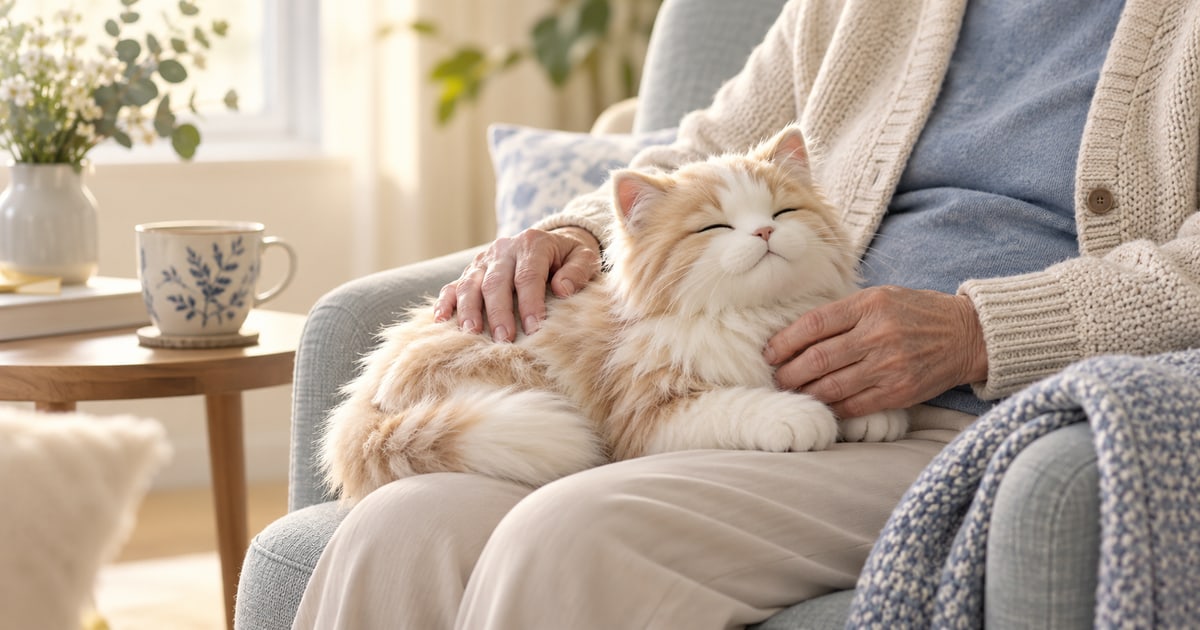
The soft, silent, no-setup ones. The Joy for All Companion Pup (about $140) and its cats are made for this: fur, a heartbeat, a bark or purr, a response to touch, no app, no Wi-Fi. Moflin ($429) is the premium version, a furry creature that develops a personality from how it is held, with no camera. metaCat purrs and reacts in the hand. What does not work is a talking desk robot or a mobile pet that needs a phone, an account and a floor plan. Care programmes that hand out companion pets report that residents talk to them, calm with them and keep them; no maker here claims a medical effect, and neither do we.
Free: the Mini Robot Guide, every robot pet marked by setup, sound and what it needs → Download the report
Which robot pets are designed for older adults?
| Robot | Price | What it does | Setup | Camera or app |
|---|---|---|---|---|
| Joy for All Companion Pup | about $140 | barks, heartbeat, turns to your voice, responds to touch | batteries, on switch | none |
| Joy for All Companion Cat | $159.99 | purrs, rolls for a belly rub, responds to touch | batteries, on switch | none |
| Moflin | $429 | warmth, small movements, sounds, a personality that develops with handling | charging bed | no camera; optional app shows mood |
| metaCat | $159 (list $189) | purrs, reacts to touch and sound | rechargeable | none |
The pattern: no screen, no speech, no account. The robots that succeed with older adults are the ones that ask nothing.
What do care programmes that use them report?
The most cited case is New York State's Office for the Aging, which began distributing Joy for All pets to older adults living alone in 2018 and reported that a large majority of recipients said they felt less lonely after a year with one. Care homes in the United States, Britain and Japan use companion pets in memory-care settings, and staff describe residents talking to them, holding them for long periods and becoming calmer. Those are reports from programmes, not clinical findings, and the makers are careful to describe their products as companions, not treatments. The one robot with a medical classification, PARO, a therapeutic seal used in hospitals, costs several thousand dollars and sits outside anything on this site. We compared the makers' descriptions with the programmes' published reports: the claims match, and both stop at "companion".
Why do talking robots not work here?
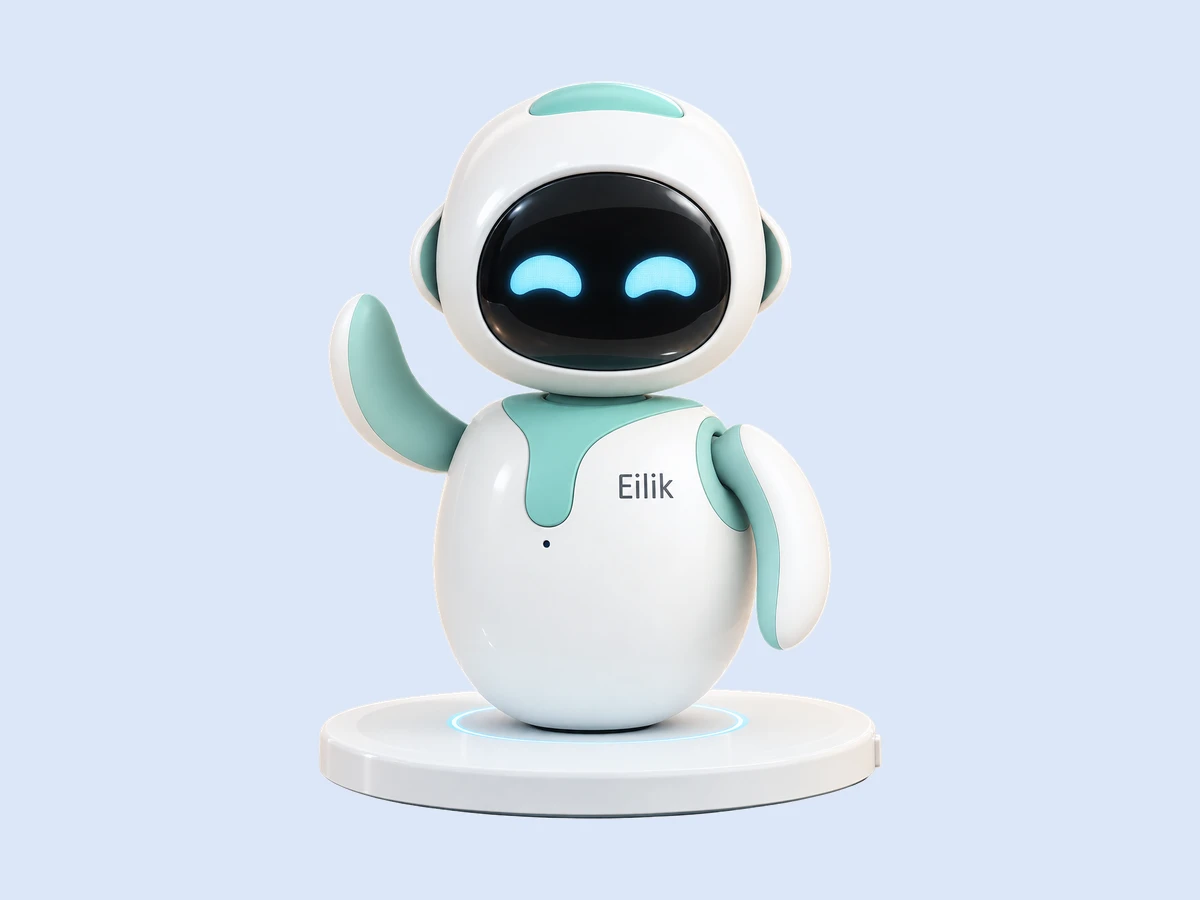
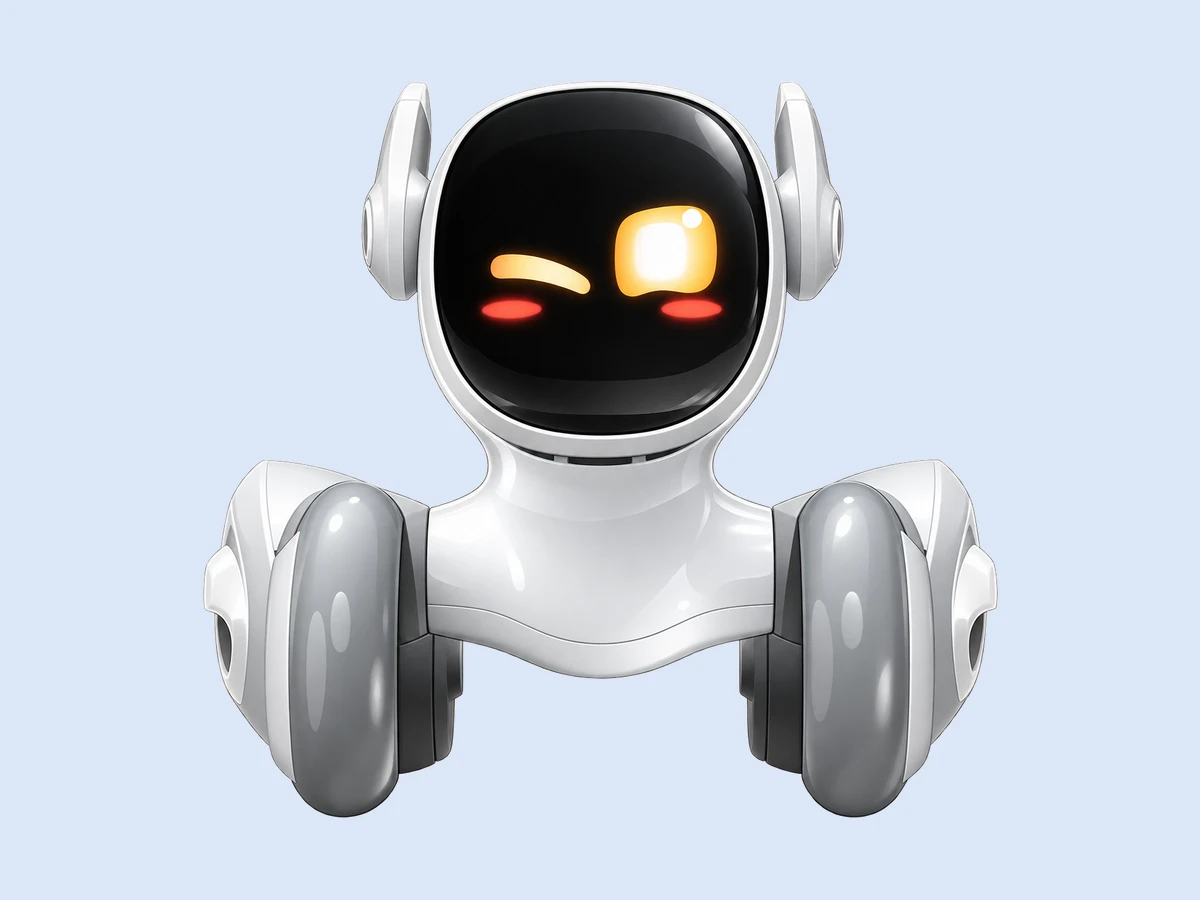
Because they demand. EMO and Loona need a phone, an app, an account, a Wi-Fi password and someone who reads notifications; their voices are synthetic, English-first and easy to mishear; their batteries need a dock found and used. For an adult who wanted a dog and cannot keep one, that is a second chore, not a pet. Eilik is the one desk robot that avoids most of this, with no app and no network, and some families choose it for a parent who likes gadgets; Loona is the one to avoid unless there is a grandchild in the house to run it. What each robot needs is in Do robot pets need Wi-Fi, an app or a subscription?.
What should you check before buying one for a parent?
- Sound level and off switch. A pup that barks at night is returned. All the robots in the table can be silenced or switched off.
- Weight and fur. Companion pets are meant to sit on a lap; the Joy for All pup is about the size of a small dog's head and body. Moflin is smaller and lighter.
- Batteries. The Joy for All pets run on ordinary batteries, which a family member replaces; Moflin charges in a bed.
- Washability. Fur collects; check what the maker says about cleaning.
- The conversation. Some adults are offended by a toy; others adopt it in an hour. Introduce it as a companion, not a substitute, and let them decide.
The wider question of what a robot pet can and cannot replace is in Can a robot pet replace a real pet?.
Which one, in the end?
For most families the Joy for All pup or cat, because it costs about $140, needs nothing and was built for this. Moflin when the budget allows and the person will hold it: its developing personality is the reason it costs three times as much. A desk robot only for a parent who enjoys gadgets and has nobody to set up an app for them. The full list with prices is in Which robot pets and mini robots can you actually buy in 2026?.
Details checked on the makers’ own stores.
FAQ
What is the best robot pet for seniors?
Makers and care programmes point to the same kind: soft, silent, no setup. The Joy for All Companion Pup and Cat are the most widely used; Moflin is the premium version.
Do robot pets help with dementia?
Care homes use companion pets in memory-care settings and report calmer, more engaged residents. That is a programme report, not a clinical claim, and no maker on this page makes one.
How much does the Joy for All Companion Pup cost?
About $140. It runs on ordinary batteries and has no app or Wi-Fi.
Is Moflin good for older adults?
Yes, for someone who will hold it: it is warm, furry, silent and has no camera. It charges in a bed and costs $429.
Can an older adult use EMO or Loona?
Only with help: both need a phone, an app and an account. Eilik is the one desk robot that needs none of that.
Sources
- Joy for All (Ageless Innovation), Companion Pup and Companion Cat pages, 2026.
- New York State Office for the Aging, companion pet programme announcements and follow-up reports, 2018 onward (as reported by AARP and NYSOFA).
- Casio, Moflin page, 2026; Fast Company (price).
- metaCat maker page, 2026.
- PARO Robots, product page (therapeutic seal, medical device classification), general reference.
- Energize Lab, Eilik page; KEYi Tech, Loona page; Living.AI, EMO page, 2026.
Silent, soft, no setup: marked for every robot. The Mini Robot Guide lists each robot pet with what it needs and what it asks of its owner. Free, one email. → Download the report